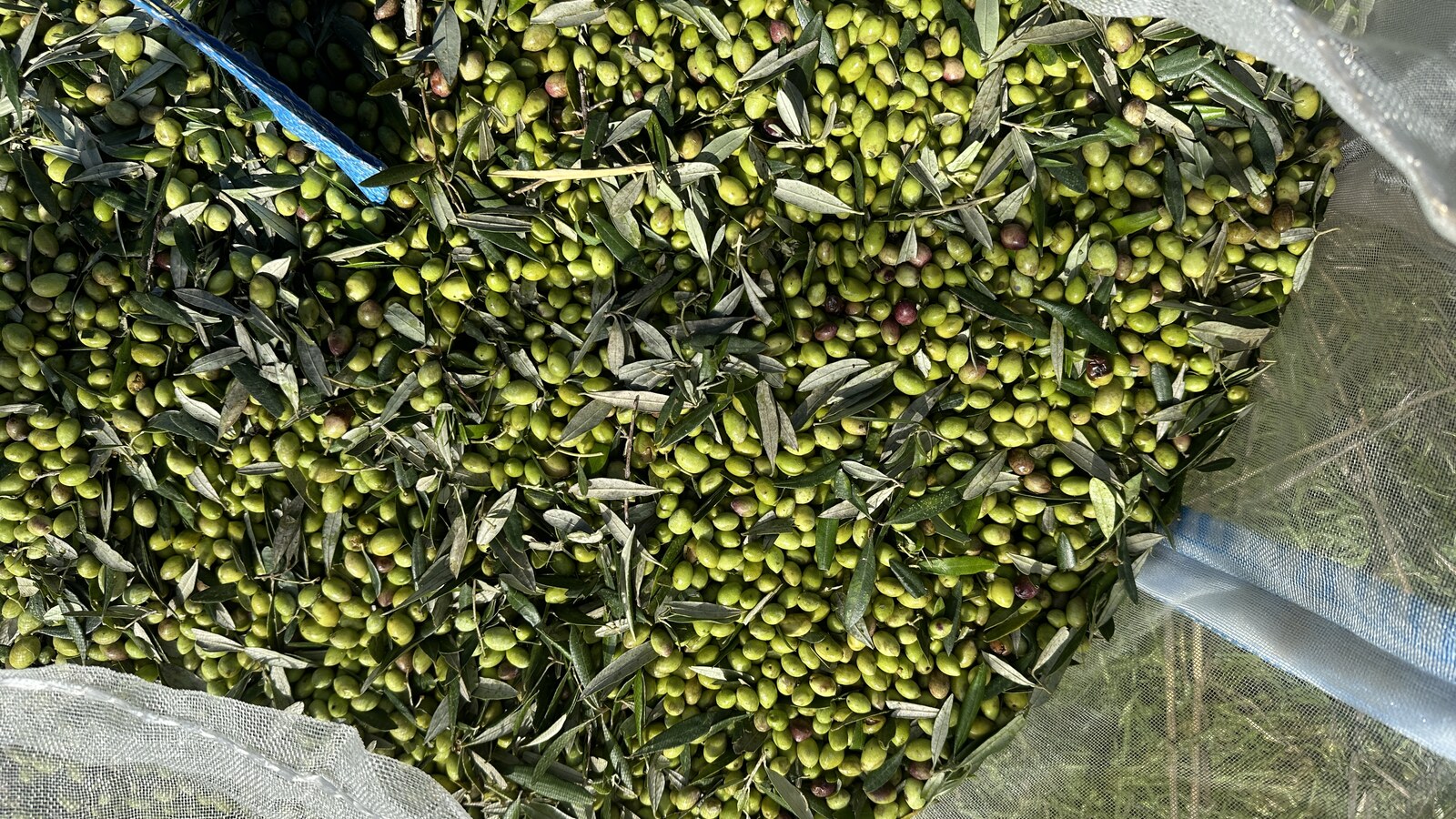
Short answer: both. There is one olive species, Olea europaea — but inside it live more than a thousand named varieties, the way grapes come in Pinot and Syrah. And then the land, the moment you pick, and the way you press decide the rest. So no two harvests ever taste exactly the same.
Yes — there are different olives
A variety (a cultivar) is a specific, cultivated olive, grown from cuttings so that every tree is a copy of the original. Each one has its own size, oil content and flavour. Some are grown to be pressed into oil, others to be cured and eaten, and a few do both. And a green and a black olive are not different fruits: green is simply unripe, black is the same olive left to ripen.
A handful you would actually meet around the Mediterranean:
- Koroneiki — Greece. Intense, green and peppery, high in polyphenols. The classic Greek oil olive.
- Galega — Portugal. Delicate, fruity and aromatic. The heart of Portuguese olive oil.
- Picual — Spain (Jaén). Robust, peppery and remarkably stable. The world's most-planted oil olive.
- Arbequina — Spain (Catalonia). Mild and buttery, with ripe fruit and almond.
- Frantoio and Leccino — Italy (Tuscany). Fragrant and grassy, through to soft and gentle.
- Coratina — Italy (Puglia). Powerful, bitter and peppery, with big polyphenols.
- Kalamata — Greece. The famous dark, meaty table olive.
And the land does the rest
Take one variety and plant it in two valleys, and you will taste two different oils. This is terroir — the sum of the place. Stress a tree a little, with poorer soil, more sun or less water, and it often answers with more character.
- Soil and altitude — rocky, poor soils and higher, cooler groves concentrate flavour and aroma.
- Sun and climate — heat, light and the day-to-night swing build the polyphenols behind that peppery bite.
- Water and stress — a thirsty tree gives less, but punchier, oil; generous water gives more, milder oil.
- The year itself — rain, wind and a warm or cool autumn make every harvest a little different. Same grove, a new bottle each year.
When you pick changes everything
This is maybe the biggest dial a farmer turns. Pick early, while the fruit is still green, or wait for it to ripen black, and the same tree gives two completely different oils.
An early, green harvest is vivid green, grassy and peppery, rich in polyphenols and antioxidants, with a longer shelf life — but it yields less oil per olive, so it costs more. A late, ripe harvest is golden, mild and sweet, gentler on the throat, with more oil per olive — but fewer polyphenols, and it ages faster.
The olive is the variety. The oil is the variety plus the place, the moment, and the hands that pressed it.
Then the press has its say
The last stretch, from tree to mill, quietly decides a lot:
- Speed — the faster olives reach the mill, the fresher and cleaner the oil. Hours matter.
- Cold extraction — keeping the paste below about 27°C protects the delicate aromas and polyphenols.
- Healthy fruit — clean, undamaged olives, picked rather than fallen, keep the oil free of defects.
- Storage — away from light, air and heat, so even a great oil does not tire.
You can taste the trip
This is exactly why our two harvests give two different oils — and why being there, hands in the nets, makes it click. In Logga, Greece, it is Koroneiki country: bright, green, peppery oil from the Peloponnese hills. In Faia, Portugal, the Galega groves give a softer, fruity, aromatic oil, pressed fresh on the spot. Same craft, different soul.